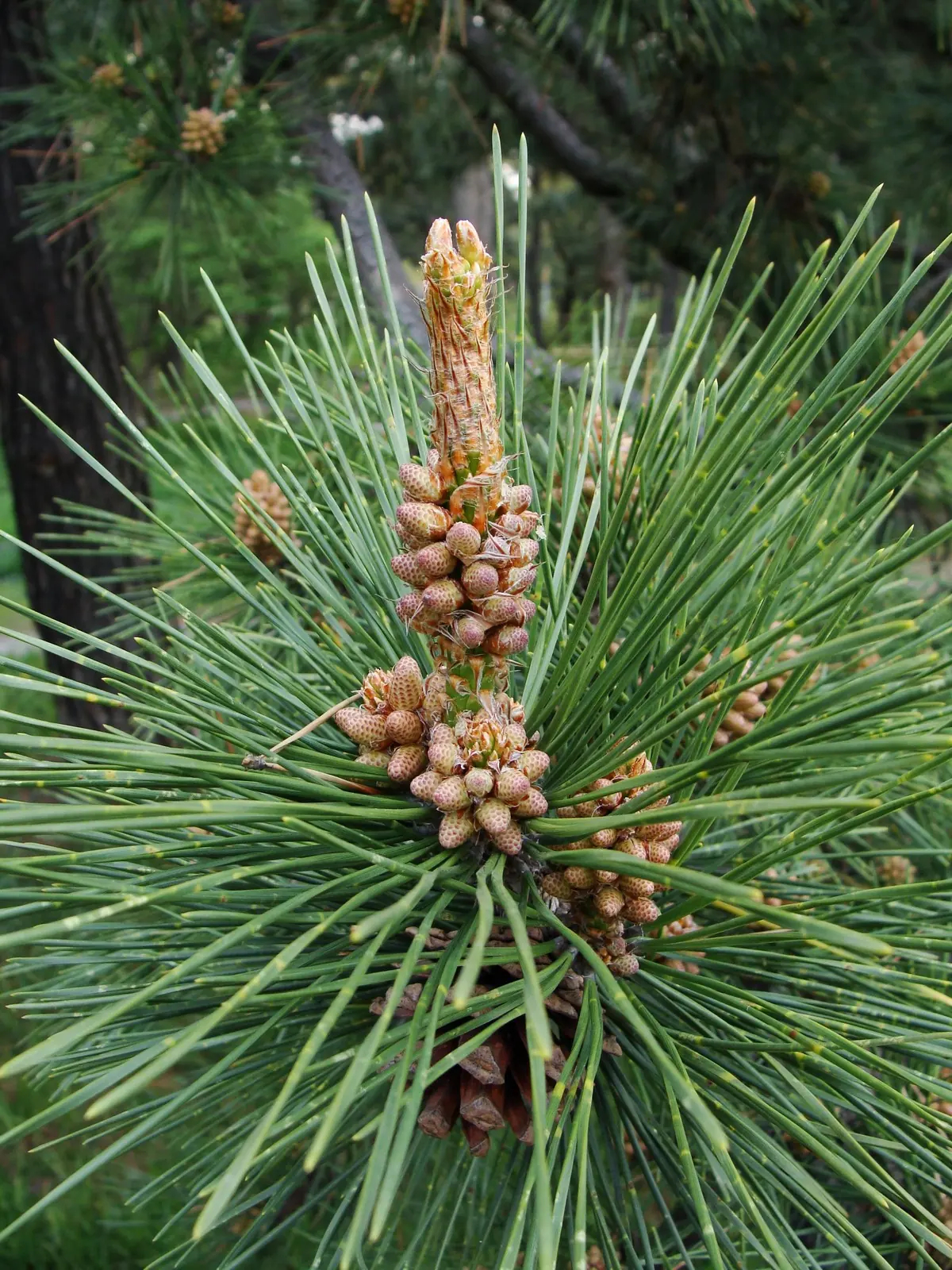
Decandling, or candle cutting, removes the whole spring shoot from a strong, refined black pine once its first flush has matured, so the tree grows a second flush of shorter shoots and shorter needles. Cut the weakest shoots first and the strongest last, leave longer stubs and fewer old needles on strong shoots, and pause feeding at the cut.
Which trees to cut, and which to leave
- Cut a healthy, well-fed tree in refinement; Dupuich notes the job can, in some cases, strip up to 60 to 70% of the foliage.
- Leave a weak, under-fed tree, or one repotted this year, and wait a year.
- Leave a tree whose trunk must still thicken, or one with a sacrifice branch: cutting slows thickening.
- Leave, or cut every other year, a tree in shade or in a cool, short summer, where Hagedorn finds the second flush erratic.
- Never cut single-flush pines such as white or Scots pine; Bonsai Empire warns "It could be fatal to remove all their candles".
Stage and climate
Cut once the spring candles have extended and the first flush has matured, with enough warm season left for a second flush to harden. Dupuich's rule is to cut sooner where summers are cool and later where they are warm: the start of summer in a cool climate, early summer in a mild climate, early to midsummer in a warm one and midsummer in a hot one. Too early gives long needles; too late gives little or no summer growth, only buds that open next spring. Large trees go earlier and small ones later, so needle length stays in scale. In Canberra, in the southern hemisphere, growers warn "if you haven't finished decandling by Christmas you might be too late".
How to cut, weakest first
- Sort the candles by length: the long, strong ones usually sit at the top and the outer tips.
- Cut the weak shoots first, then the medium and strong ones: growers space these stages 10 to 14 days apart.
- We recommend a shorter plan: cut the weak shoots, the very smallest included, a week or so ahead of the strong ones; growers differ on cutting the smallest at all.
- Shoots cut first get the most time to regrow, so weak areas close the gap; cutting strong ones first would widen it.
Stub length and needles
Cut square, close to the base, and leave a little of this year's shoot, because the new buds sprout from that tissue; do not cut the surrounding needles. Dupuich grades the stub by strength: about twice the shoot's diameter on strong shoots (1/4 to 1/2 in), about once on medium ones (1/8 to 1/4 in) and about half on weak ones (1/16 to 1/8 in). Hagedorn and Peter Tea agree that a longer stub slows the summer shoots. Then thin the old needles: Dupuich leaves 3 to 7 pairs on strong shoots, 5 to 9 on medium and 7 to 12 on weak, and leaves shoots with only 1 to 3 pairs alone.
Feeding before and after
Feed heavily from when the roots wake in spring until the cut, so the tree has the strength for a second flush. Stop at the cut so the new needles stay short; growers differ on when to restart, and we recommend waiting until the second flush has hardened. Keep heavy rain off the second flush, as extra water lengthens needles.
What happens next
New buds show within 7 to 12 days, and the summer shoots are growing well by about five weeks. A medium shoot usually gives two summer shoots, and a strong one three to five or more. In autumn each cluster is cut down to two, though growers differ on which two (see the black pine guide).
Spring candle breaking is a different technique
In spring, before the needles open, an over-strong candle can be broken partway: that shoot weakens, the others strengthen, and no second flush follows. We recommend letting spring candles grow and relying on the summer cut, though growers differ.
Where growers differ
The very smallest candles. Our recommendation, where growers differ: cut them too, first, about a week ahead of the strong ones; Hagedorn, in one post, also cuts the small ones. Others differ: Hagedorn in another post, and the Buffalo Bonsai Society, leave them alone.
Staged or all in one day. Growers differ: Peter Tea, the Buffalo Bonsai Society and Walston stage the cut, as we recommend, while Dupuich also cuts in one day when vigour is fairly even, balancing with stubs and needle counts.
Leaving a stub at all. Growers differ: Eastern Leaf and Daiju-en cut at the very base, with no stub, though Daiju-en says a stub only delays and shortens the second flush.
The last feed before cutting. Growers differ, with no recommended way: Mirai gives the last feed a month before, while Dupuich feeds up to the cut.
When feeding restarts. Our recommendation, where growers differ: once the second flush has hardened, as Bonsai Empire advises. Others restart after four weeks, or "about a month or two later" (Dupuich), after 4 to 6 weeks (Hagedorn) or when the second buds push (Buffalo Bonsai Society); Mirai, in Oregon's mild summers, does not feed "from mid-July through August".
A warm climate's date. Growers differ, with no recommended way: Dupuich places Los Angeles in his warm-climate window, while Hagedorn puts it "closer to July 4th".
Related
Sources
- Jonas Dupuich, Bonsai Tonight: Decandling overview, When to decandle, How late is too late, Decandling in two stages, Controlling vigor, Balancing summer growth, Decandling techniques, Black pine calendar
- Michael Hagedorn, Crataegus Bonsai: A deeper dive into decandling, Decandling and breaking pine shoots, Black pine as a single-flush pine
- Peter Tea: De-candling and stuff
- Buffalo Bonsai Society: Black pine pruning
- Brent Walston, Evergreen Gardenworks: Pines
- Daiju-en: 黒松の芽切り (black pine candle cutting)
- Eastern Leaf (Jason Chan): Black pine candle cutting
- Bonsai Empire: Black pine, Pines
- Bonsai Mirai: Japanese black pine; Southern hemisphere candle cutting, forum
- Bjorn Bjorholm, Eisei-en: Japanese pine care guide
- Kigi Bonsai: Japanese black pine care in Australia