Modern bonsai was shaped above all by a few Japanese family nurseries of the 20th century, in Ōmiya Bonsai Village near Tokyo and at Daiju-en in Okazaki, and by the apprentices they trained, who carried the craft to America, Europe and Australia. Much of what you do at the bench comes from them: Daiju-en credits its founder with discovering black pine decandling in 1937, and one compiled history credits Kyūzō Murata with the first shears made for bonsai and the concave cutter. Knowing who trained whom also explains why growers disagree, because many splits in technique run along lines of teaching.
The apprenticeship system
The usual term is five years plus a further period of service. Peter Tea, apprenticed at Aichi-en, recorded a saying that "finishing a Bonsai apprenticeship in Japan just means you ate rice for five years". Some apprentices live off site and come in like any job; others live with the family, and Tea, who did, names "loyalty, humility and inequality" as what the life teaches.
Some terms run longer. Six years are recorded for Ryan Neil under Masahiko Kimura and for Bjorn Bjorholm under Keiichi Fujikawa, and Kimura's own apprenticeship lasted eleven years. For Peter Warren under Kunio Kobayashi, sources differ: six years by the National Bonsai Foundation and Bonsai Empire, five in the lineage table compiled by Robert Baran with William Valavanis.
One compiled history records that an apprentice often took his master's name when the master died, and that the childless Murata adopted his apprentice Isamu Wakabayashi. At the end of his six years Bjorholm received the Nippon Bonsai Association's certification as a professional.
The Japanese masters and their nurseries
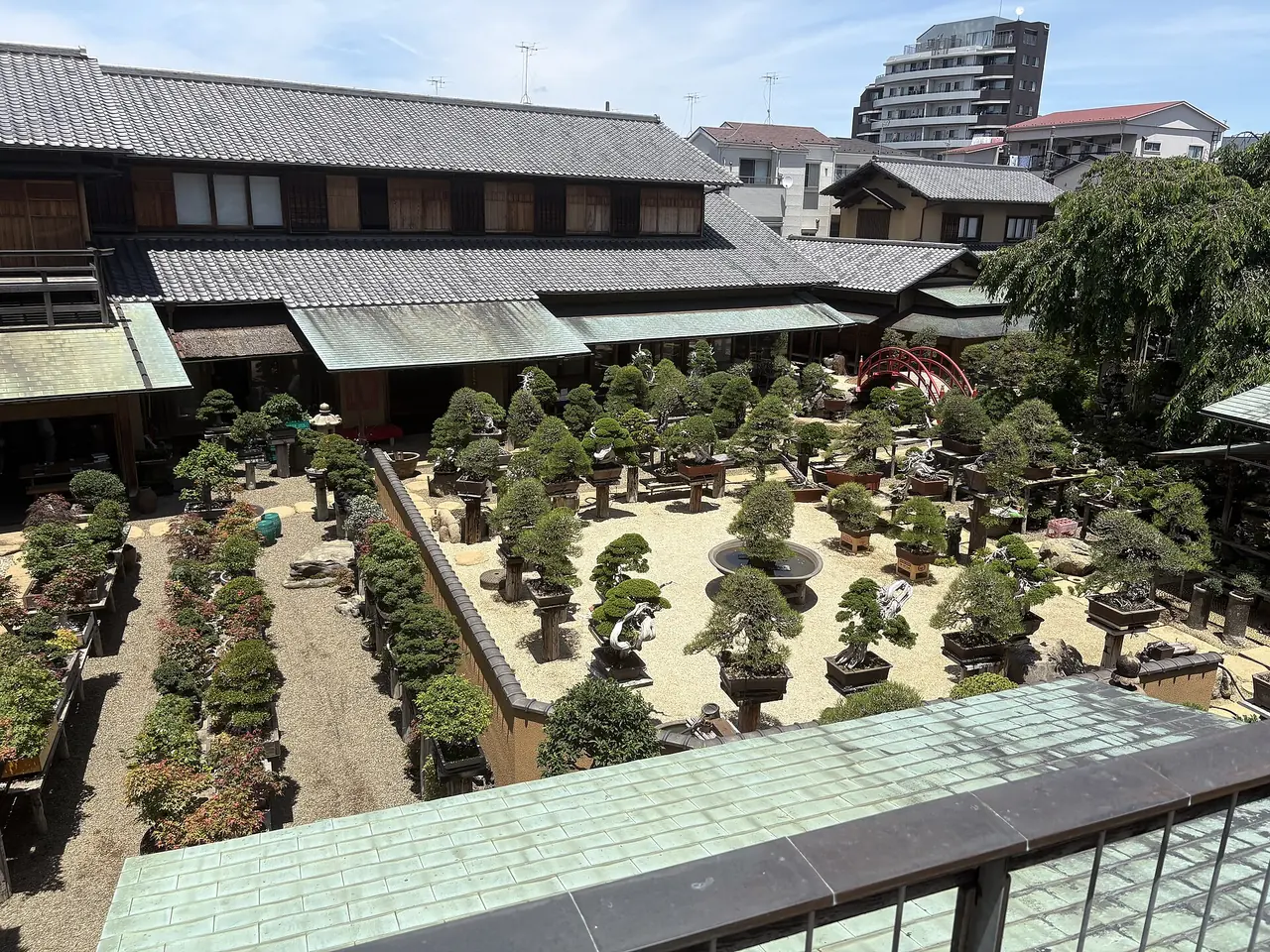
Ōmiya Bonsai Village was established in 1925, after growers moved out from Tokyo following the 1923 earthquake. Before the Second World War it had some 35 gardens. Sources differ on how many remain: six on the village's own site, seven in the national tourism guide.
- Mansei-en (蔓青園). Saburō Katō (加藤 三郎), 1915 to 2008, ran it as the third generation of his family, chaired the World Bonsai Friendship Federation and led the first World Bonsai Convention at Ōmiya in 1989. One compiled history records that he founded the professional growers' union that runs the Sakufu-ten in 1969, and joined the delegation that presented 53 bonsai to the United States in 1976.
- Kyūka-en (九霞園). Kyūzō Murata (村田 久造) opened it in 1929; one compiled history gives his dates as 1902 to 1991. The same compiled history says he began caring for the Imperial Household's bonsai in 1931 and, in 1988, became the first bonsai gardener given the Order of the Rising Sun. The garden today is described as shaping by patient trimming rather than wiring.
- Toju-en (藤樹園). Motosuke Hamano (浜野 元介) taught both Masahiko Kimura and Shinji Suzuki. Sources differ on its opening: 1931 on the village site, 1929 in Japanese Wikipedia, which calls it Japan's oldest bonsai school.
- Fuyō-en (芙蓉園). Fusazō Takeyama (竹山 房造) founded it, and its reputation rests on deciduous trees and group plantings. Sources differ on its opening: 1939 on the village site, 1925 in Japanese Wikipedia.
Daiju-en (大樹園) in Okazaki is the pine dynasty of the Suzuki family. Sources differ on its founding by Saichi Suzuki (鈴木 佐市, 1902 to 1991): 1931 according to Valavanis, 1934 according to the garden. By the garden's account he found decandling in 1937, after noticing that shoots eaten by the pine shoot borer regrew with much shorter needles, and first showed a decandled black pine at the 31st Kokufu-ten in 1957. His son Toshinori (俊則) established needle thinning on black pine and founded the Taikan-ten in 1981; sources differ on his birth year, 1925 or 1929. Both techniques are covered in our decandling guide.
These artists are credited by name at the Sakufu-ten, the professionals' show, whose single top prize is the Prime Minister's Award; at the Kokufu-ten the prize is credited to the person who owns the tree. By the Sakufu-ten list in one compiled history, Shinji Suzuki of Obuse won that award four times, in 1996, 2004, 2005 and 2007.
Kimura and Kobayashi
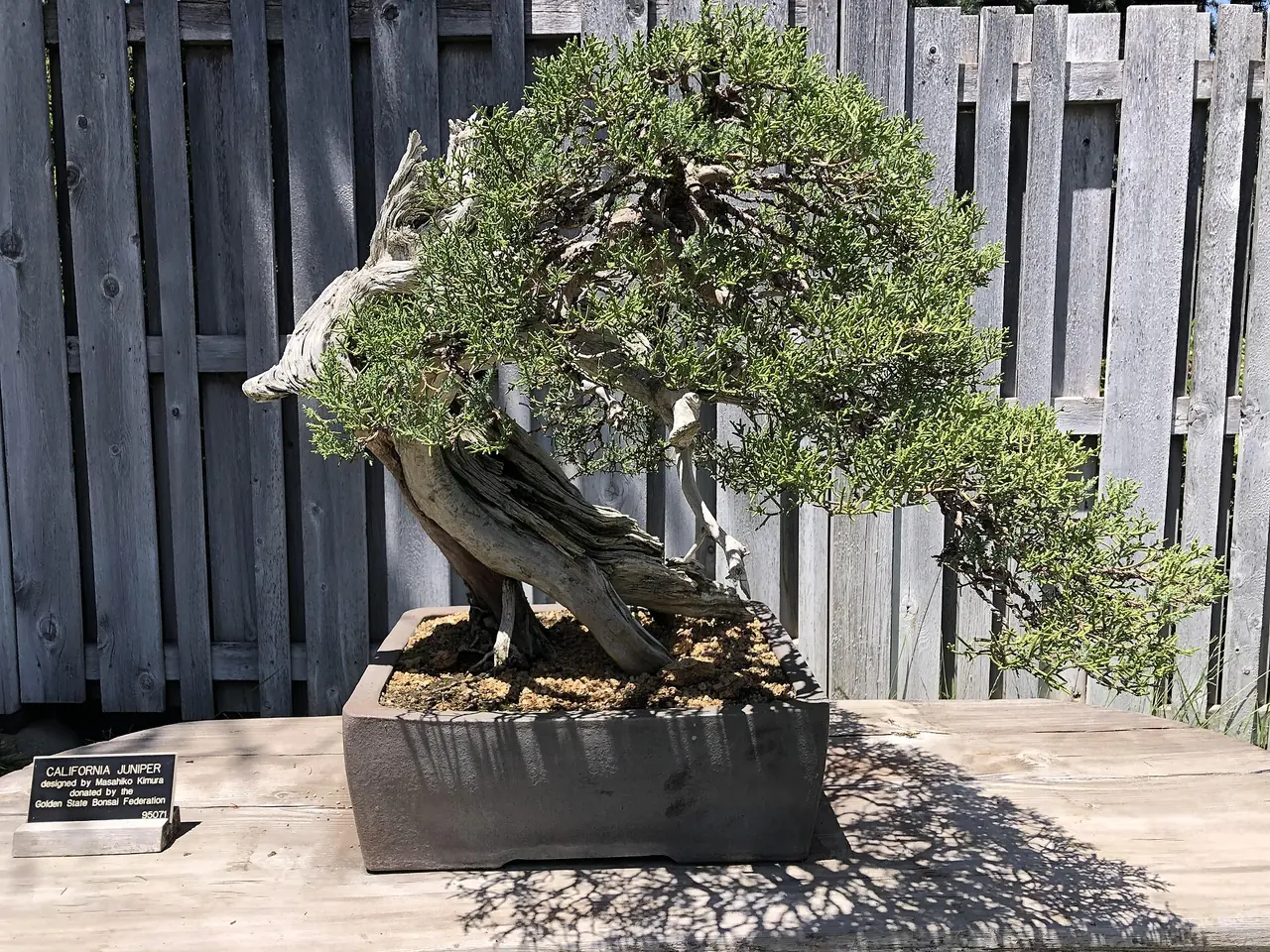
Masahiko Kimura (木村 正彦), born in 1940 in Ōmiya, began an apprenticeship at Toju-en under Hamano at 15. He is known for shimpaku junipers with intricate, stark deadwood, carved with tools of his own design; Bonsai Empire notes his work "was at first highly controversial". His Z-shaped shimpaku "The Dance of a Rising Dragon" won the Prime Minister's Award at the 14th Sakufu-ten in 1988. Sources differ on his other awards: Wikipedia and Bonsai Empire add 1995, 2000 and 2001 without naming the show, while the compiled Sakufu-ten list credits him in 1988 only and gives 2001 to Kobayashi. At the 100th Kokufu-ten in 2026 more than 40 trees owned by his clients were shown.
Kunio Kobayashi (小林 國雄), born in 1948 in Tokyo, took up bonsai at 28 after seeing a white pine at an exhibition. His own page lists four Prime Minister's Awards, in 1989, 1992, 1999 and 2001, and says he worked on 16 Kokufu prize winners. Sources differ on where those awards were won: his page and the compiled Sakufu-ten list place them at the Sakufu-ten, Wikipedia at the Kokufu-ten. In 2002 he opened the Shunka-en (春花園) museum in Edogawa, Tokyo, with over 1,000 trees, and Wikipedia counts over 200 apprentices and international students.
Their lines show how growers differ. On juniper shoots, growers differ: Ryan Neil's Mirai, in Kimura's line, writes "we never pinch junipers, instead relying solely on scissor work", while Kobayashi, as Bonsai Bark reported a translated 1993 article, pinched to balance strong and weak areas.
Masters who brought bonsai to the West
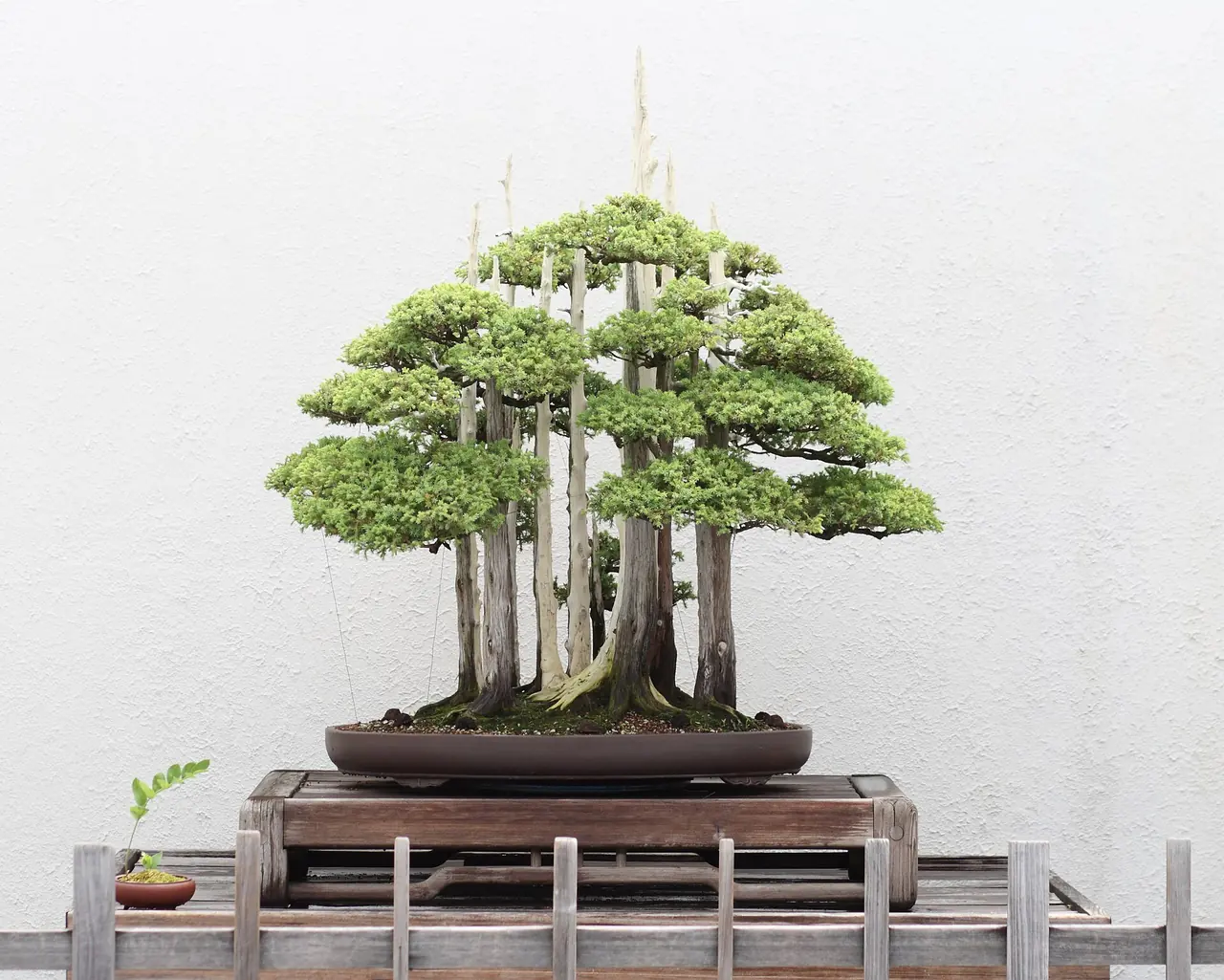
John Naka (仲 義雄), born in Colorado in 1914, moved to Japan at 8, studied bonsai under his grandfather and settled in Los Angeles in 1946; he died in 2004. He worked with native Southern Californian species and gave Goshin, eleven junipers trained since 1948 or 1953 (sources differ), to the national museum in 1984. He was the first bonsai artist given a National Heritage Fellowship (1992) and the first member of the National Bonsai Hall of Fame (2014).
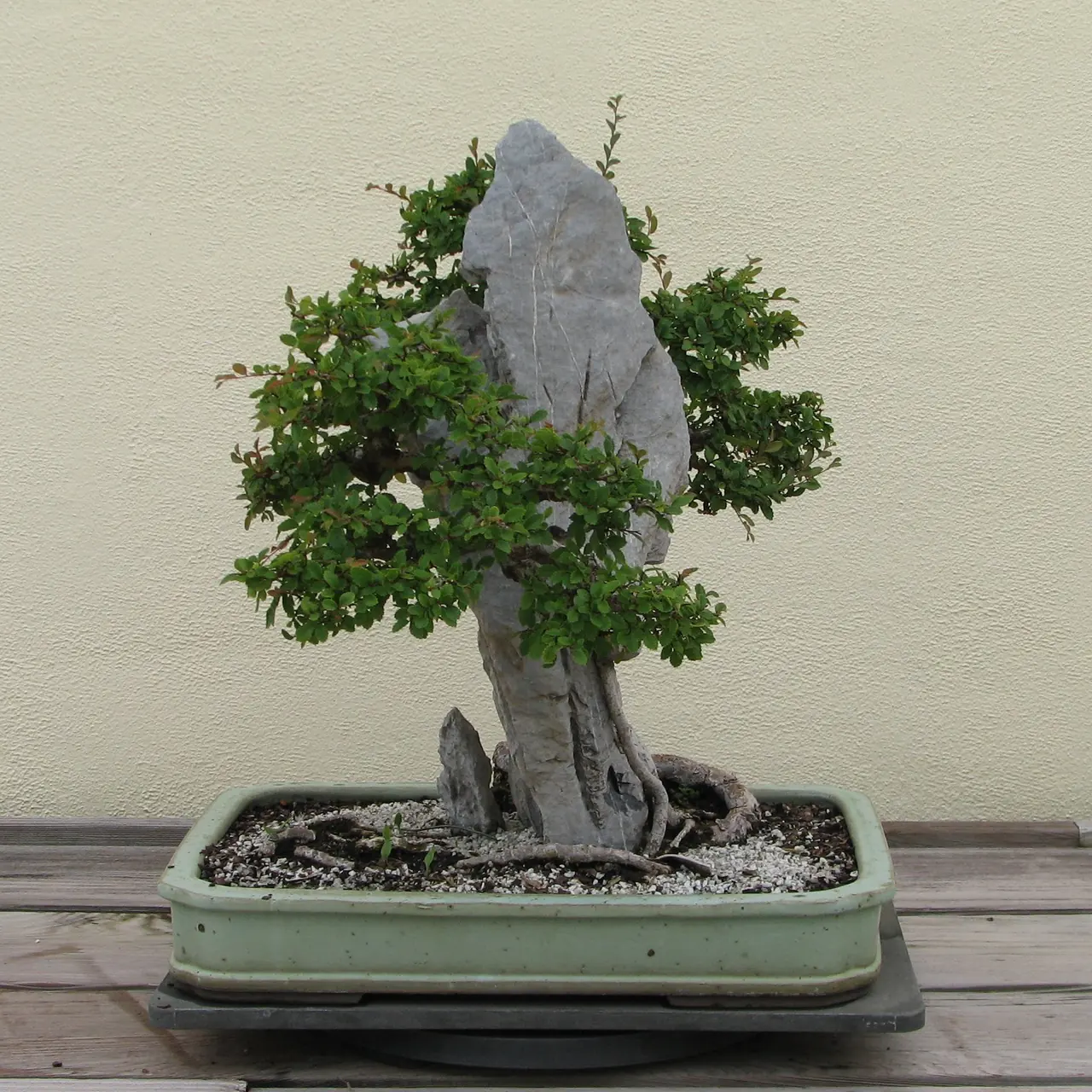
Yuji Yoshimura (1921 to 1997) ran the first bonsai course for foreigners in Tokyo in 1952, and his 1957 book with Giovanna M. Halford, in Valavanis's words, "established the English style terminology used throughout the world today". By Wikipedia's account, his 1972 lecture to John Creech planted the idea that became the National Bonsai & Penjing Museum. His student William N. Valavanis, who also studied with Murata, founded the U.S. National Bonsai Exhibition in 2008.
Since 2000 a further line comes from Americans who finished apprenticeships in Japan, among them Kathy Shaner, Ryan Neil, Michael Hagedorn and Bjorn Bjorholm. In Europe, Walter Pall was one of the first to use native European species, and Luis Vallejo, who received the Order of the Rising Sun in 2008, founded his bonsai museum near Madrid; sources differ on Vallejo's training, formal teachers in the lineage table against self-study in Wikipedia.
Bonsai in Australia
Vita Koreshoff, born in Manchuria, "started growing Bonsai in Australia in 1932", in Brisbane, then settled in Sydney, where he and Dorothy wed in 1949, his publisher records. In 1976 their nursery at Castle Hill was made the official Australian branch of a Tokyo school, the Nippon Bonsai Saikei Institute, and their daughter Deborah wrote Bonsai: Its Art, Science, History and Philosophy (1984). Members credit the Koreshoffs and Len Webber with establishing Australia's club scene.
Yoshimura spent two months in Australia in 1962, and the national collection's curator dates "early learnings" to the 1970s, "when the likes of John Naka came for workshops". Megumi Bennett, a student of Saburō Katō who migrated in 1974, applied Japanese technique to the Port Jackson fig and in 2008 became the first practitioner living outside Japan to receive the Nippon Bonsai Association's instructor qualification.
Penjing and other traditions
China's penjing (盆景) is organised in regional schools. The Lingnan school (岭南派) "truly formed after the 1930s" from three currents, led by Kong Taichu (孔泰初), the Taoists of Sanyuan Temple and the monk Su Ren (素仁), says a Hong Kong Education Bureau sheet. Kong Taichu originated "grow the branch, cut the trunk", the school's basic shaping method. Sources differ on the third founder's name: the monk Su Ren, or "Mr Chen Suren" on a UK club page.
Wu Yee-sun (伍宜孫) of Hong Kong founded the Man Lung Garden in 1967 and gave penjing to Montreal, Washington and Hong Kong Baptist University; sources differ on his birth year, 1904 or 1905. Zhao Qingquan (赵庆泉) of Yangzhou created water-and-land penjing and was named a China Penjing Art Master in 1994.
Where to see their trees
Naka's Goshin and Yoshimura's crape myrtle are at the National Bonsai & Penjing Museum in Washington, whose buildings carry the names of Naka, Yoshimura and Wu Yee-sun. Kyūka-en and Mansei-en are in Ōmiya, Kobayashi's trees at Shunka-en, and Daiju-en takes visitors by prior arrangement. Our guide to where to see great bonsai covers these collections and more worldwide.
Everyone named here appears as history and as a place to visit; none is a partner or endorser of this site.
Sources
- Robert J. Baran with William N. Valavanis, Magical Miniature Landscapes (a hobbyist compilation): The Lineage of Some of Our Bonsai Teachers, Sakufu-ten list, Kyuzo Murata I, Kyuzo Murata II, Saburo Kato I, Saburo Kato II
- Ōmiya Bonsai Village: Gardens, History; MLIT multilingual guide: Kyūka-en, Ōmiya Bonsai Village; Wikipedia (ja), 大宮盆栽村
- Daiju-en: History, Artists; William N. Valavanis: A visit to Daiju-en, 100th Kokufu-ten statistics, National Bonsai Hall of Fame
- Masahiko Kimura: Wikipedia), Bonsai Empire
- Kunio Kobayashi: his own page, Wikipedia, Bonsai Empire, Peter Warren
- Apprenticeship: Peter Tea, 2011, Bjorn Bjorholm, staff page, National Bonsai Foundation, Seiji Morimae
- United States: Wikipedia, John Naka, National Bonsai Foundation, John Naka, Wikipedia, Yuji Yoshimura, Wikipedia, William N. Valavanis, Midori Bonsai, early club history, Wikipedia, Ryan Neil, Crataegus Bonsai, people
- Europe: Wikipedia, Walter Pall, Luis Vallejo Bonsai Museum, history
- Australia: Bonsai in Australia, publisher's blurb via Nokomis, Baran, books K to N, AusBonsai forum, 2010, National Bonsai Foundation, Canberra, Japan Foundation Sydney, Bonsai: Generations of Growth
- Juniper pinching: Mirai, juniper, Bonsai Bark, Kobayashi on pinching
- Penjing: Hong Kong Education Bureau, penjing styles (Chinese), Wikipedia, Wu Yee-sun