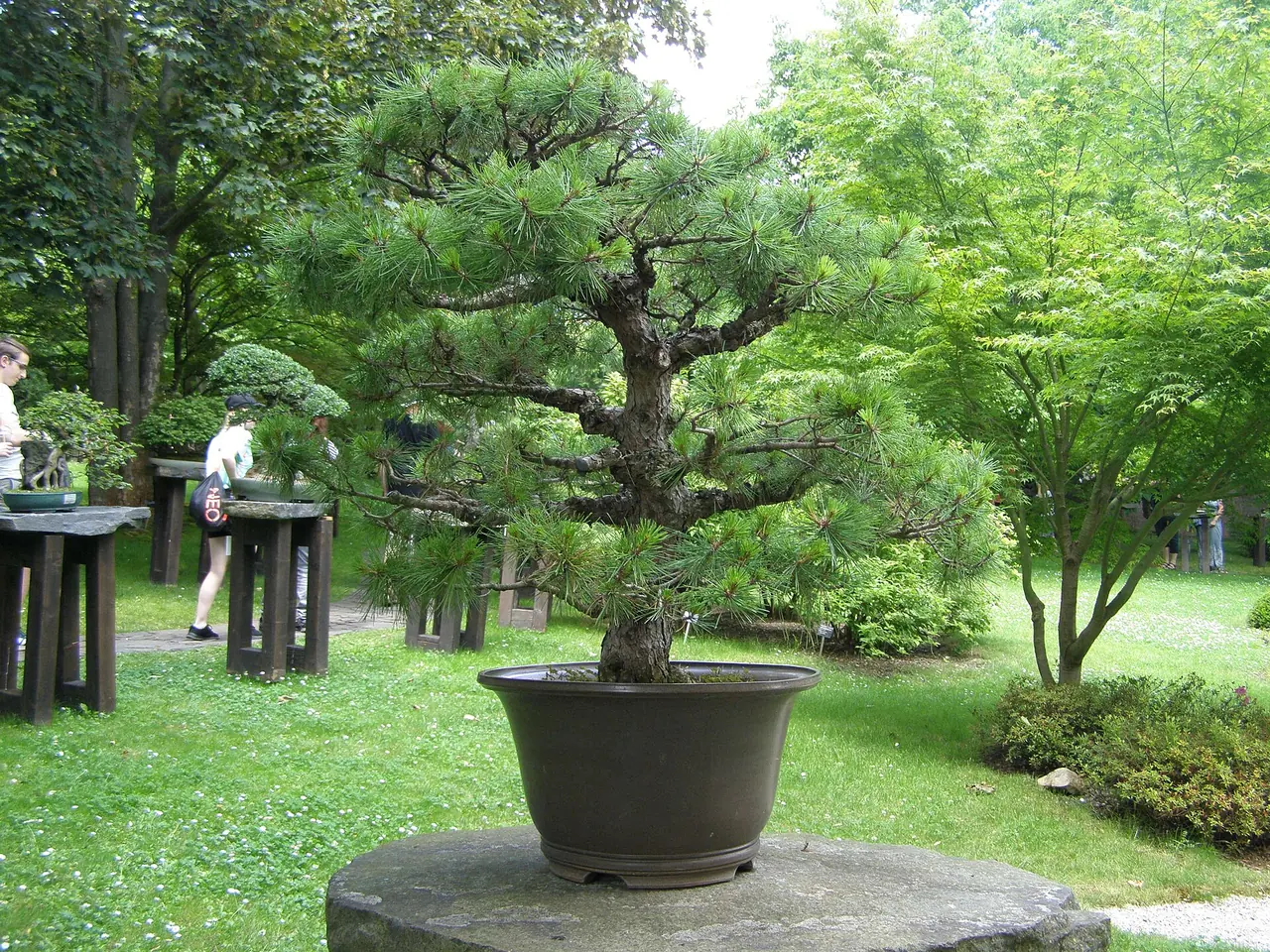
Find a club, a class or a teacher first: growers in the United States and Japan agree that people learn fastest hands-on, with someone to look at the tree beside them. Then buy one healthy tree of a species that lives well in your climate, and in the place you mean to keep it. Learn to keep that tree alive, starting with watering, before you wire or repot it.
Clubs, classes and teachers
Eric Schrader, who teaches the basics class at the Bonsai Society of San Francisco, puts it simply: "the best way to learn is definitely hands-on." In Saitama, Hiromi Hamano of the Omiya Bonsai Cooperative suggests a class at a nursery and then a teacher, the quickest way to progress. The Midwest Bonsai Society in Chicago invites newcomers to bring a new tree to a meeting for advice.
National bodies keep public club lists. They are directories, and naming them here is not a partnership.
- United States: the American Bonsai Society's club list, by state, with a Canada page; it gives no guarantee of accuracy.
- Worldwide: the Bonsai Clubs International directory, which listed 37 affiliated clubs when read.
- United Kingdom: the Federation of British Bonsai Societies' members page, with each society's venue and meeting day.
- Australia: the Association of Australian Bonsai Clubs' Find a Club table.
- Europe: the European Bonsai Association links to national bodies in 19 member countries.
- By country: Bonsai Empire's club lists.
No public directory was found for Japan or China.
Club teaching takes several forms: a monthly beginners' workshop, a course of three 3-hour sessions in successive months, or a workshop night "free to members, $20 non-members". The Phoenix Bonsai Society lists what clubs give: quick feedback, workshops, digs and nursery crawls, other members' trees, and sometimes discounts. It is honest about the downside too: "some petty politics" and some "boring" meetings. Online courses were priced from $29.99 to $84.99 when read on 2026-11-16.
Where to buy
- Garden centres and home centres. Cheap trees, "often of questionable quality" (Bonsai Empire), with little training and often the wrong soil (Phoenix). Japanese forum answers still call a home centre a fine place to begin, so long as you do not aim high.
- Specialist nurseries and shops. More developed trees at higher prices.
- Small family nurseries. Good for rough nursery stock, which Bonsai Empire says is mostly offered from early spring to late summer.
- Clubs. Sales, digs and nursery crawls.
- The wild. Only with the landowner's permission (UK) or a permit (US public land).
Most beginners start with nursery stock, Bonsai Empire notes, because it already has a trunk and some structure.
What to look for
- Health first. Choose a tree showing vigorous growth; the Phoenix club lists a tree "not healthy enough when you got it" among its reasons trees die.
- The trunk and root flare. These are what you cannot easily change, so they decide the choice; branches can be grown.
- Taper. Many cheap trees are grown tall and then chopped, Bonsai Empire explains, leaving a scar that "will always be visible" and a trunk with no taper.
- Small flowers on flowering species, since flower size cannot be reduced, says the UK's National Bonsai Society.
Red flags:
- Pebbles glued onto the soil, which stop you judging how wet it is.
- Ordinary potting soil, or a pot with no drainage hole.
- A juniper whose foliage has gone dull and brittle: junipers and pines can be dead weeks before they show it, the Phoenix club warns.
- An outdoor tree sold as an "indoor bonsai".
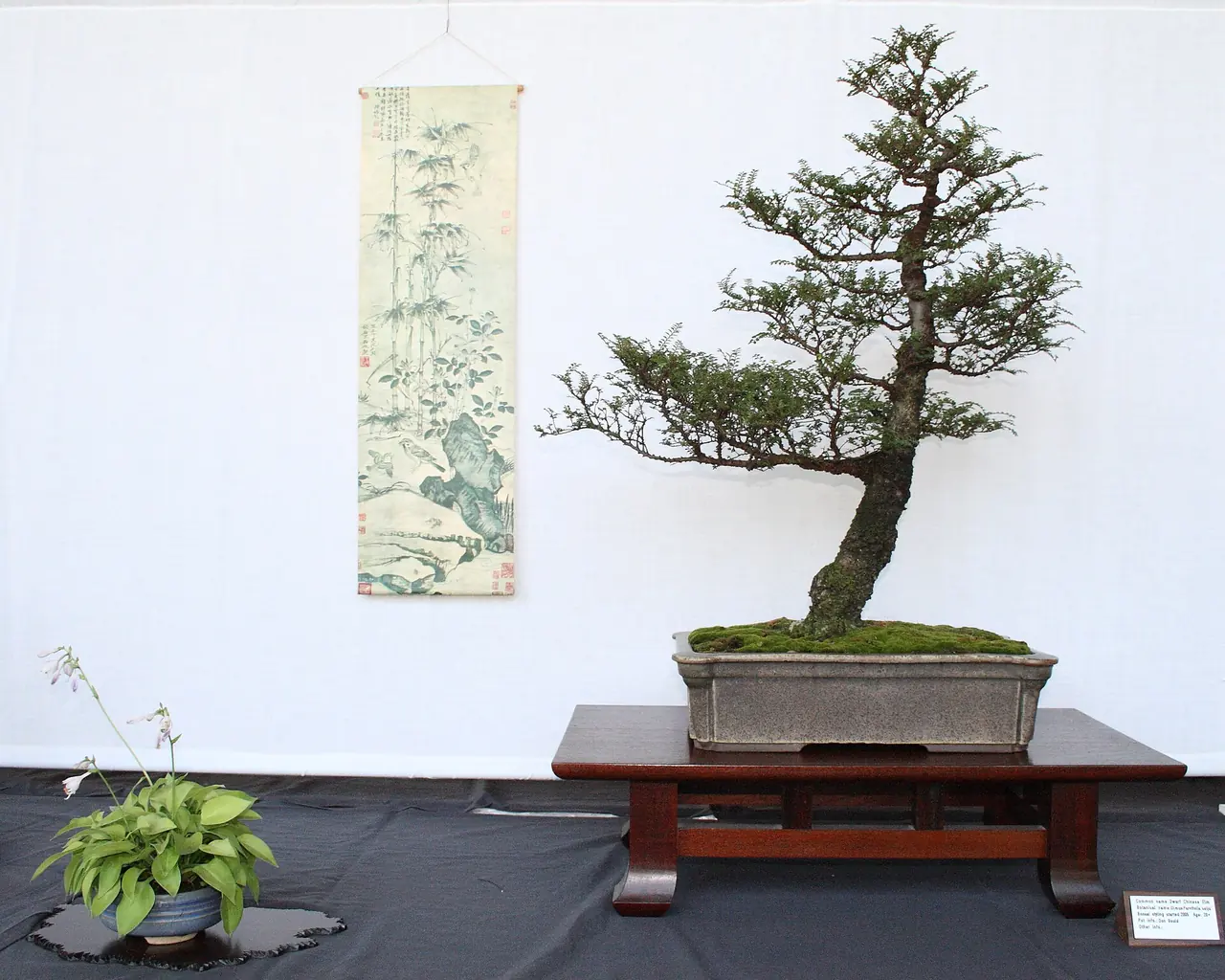
- "Zelkova" that is really Chinese elm, a common mislabel in the UK.
- An imported tree with no papers or origin history (a US seller's warning).
A first species for your climate
Buy for where the tree will live: only tropical species do well indoors, and outdoor trees only outside.
| Where | Suggested first trees |
|---|---|
| Indoors, anywhere | Ficus, the most popular indoor beginner tree (Bonsai Empire) |
| Saitama, Japan | Conifers; shimpaku is tough, as are white and black pine (Hamano) |
| Orlando, Florida | Ficus microcarpa, Chinese elm, Fukien tea (Lavigne) |
| San Francisco | Cotoneaster microphyllus, used in Schrader's basics class |
| UK, mild winters | Chinese elm, rated easy |
Hamano finds the showy flowering and fruiting trees beginners like somewhat hard to grow. In Wisconsin, Kevin Stoeveken advises against sugar maple and white pine, whose leaves are hard to scale down. Juniper is where growers differ most (below).
Tools to start with
Every tool source we read starts with one pair of scissors and one cutter for branches, adding wire cutters and pliers once you begin wiring. Dupuich's advice: "Scissors need to be sharp, not expensive". Schrader bought $200 scissors, then found he used "a $20 pair most often". A chopstick helps at repotting; for checking whether a tree needs water, growers differ, and we recommend judging by the soil surface in a mineral mix (see the watering article).
Time and cost
No source we read gives hours per week. What they give is watering: about daily in the growing season (Schrader, San Francisco), several times a day in summer (New York Botanical Garden), and less in winter. In Saitama, Hamano waters once a day in spring and autumn, twice in summer and two or three times a week in winter. Plan for holidays: a Japanese forum grower finds even one night away a problem.
Prices as listed when read on 2026-11-16, in each shop's own currency:
- A garden-centre bonsai, "around $20"; young nursery stock, around $20 (Bonsai Empire).
- A Dutch shop's black pine, 8.5 cm and "± 8 years old", €89.95; its Japanese maple, 65 cm and "± 30 years old", €2,450.00.
- A UK shop's 35-year black pine, £7,500.
Seeds, cuttings and seedlings cost very little, the National Bonsai Society adds. Club membership fees were not found. Ages on labels are estimates; garden-centre trees are mostly about 5 to 10 years old.
Given a tree?
Identify it, put it in the right place and leave it alone for a while: our gift bonsai guide takes you through the first weeks.
What tree is it?
Care depends on the species, so identify it before anything else; the Midwest club offers to tell you at a meeting. Start with the foliage: needles, scales or broad leaves. The usual mall juniper has prickly blue-green needles in threes; shimpaku has mostly soft scale foliage once mature. Ficus bleeds milky sap from a cut; Fukien tea has fine white hairs and a notched leaf tip; serissa smells unpleasant when bruised.
Phone apps. The one study we found, a Rutgers poster, tested six apps on 55 New Jersey trees: PictureThis was most accurate, then iNaturalist, and PlantSnap least. Leaf photos did much better than bark, unlobed simple leaves did worst, and the authors advise using apps to narrow things down or as "a second opinion". Our own reading: most mall species have unlobed simple leaves, and no study of apps on bonsai was found.
Where growers differ
Juniper as a first tree. Growers differ by region, with no recommended way. For: Bonsai Empire calls juniper "a good bet for beginners"; Hamano, in Saitama, calls shimpaku tough; a Guangdong page calls it a good choice, though not indoors. A UK guide rates Chinese juniper easy to moderate, and a Mediterranean guide calls juniper forgiving. Against: the Phoenix club in the Arizona desert, and Adam Lavigne in humid Orlando, who puts the chance of a first juniper dying at "close to 80%", his own estimate. Both blame trees kept indoors.
Juniper indoors. Growers differ, with no recommended way, though six named sources stand on one side. Schrader, the Midwest and Phoenix clubs, Chicago Botanic Garden, the New York Botanical Garden and Bonsai Empire say hardy trees belong outdoors; Schrader gives an indoor juniper "two or three years". Against them, Costa Farms, a Florida grower of mall bonsai, writes that juniper prefers "a bright spot indoors". Short visits are another matter: two days a season at most for conifers in Phoenix, no more than three days in a row in a Japanese summer.
Do you need outdoor space? Growers differ, with no recommended way. Stoeveken does not recommend bonsai to people without outdoor space; the UK's National Bonsai Society says you need no garden, only somewhere outside, and that some species tolerate indoors.
How soon to repot a new tree. Growers agree not to repot on arrival out of season, but differ on how long to wait, with no recommended way. Lavigne leaves it "about a year, or more"; Bonsai Empire repots at once only if the tree was bought in early spring; Greenwood, in the UK, repots imports in poor compost "at the next opportunity". When you do repot, our recommended season is spring at or just before bud swell for pine and maple, and early spring as the foliage greens for juniper.
Common mistakes
- Keeping a hardy tree indoors: put it outside.
- Watering on a timetable: check the soil every day instead.
- Buying a weak tree to rescue: start with a vigorous one.
- Repotting out of season: wait for the right stage.
Related
- Got a bonsai as a gift? What to do first
- Is my bonsai dying?
- When to repot a bonsai, in any climate
- Watering and soil
Sources
- Eric Schrader (Bonsai Society of San Francisco), Gardenista: Ask the expert: bonsai basics
- Hiromi Hamano (Omiya Bonsai Cooperative), Japanese agriculture ministry, aff, 2017: bonsai feature, pp. 16–17, pp. 14–15
- Club directories: American Bonsai Society, Bonsai Clubs International, Federation of British Bonsai Societies, Association of Australian Bonsai Clubs, European Bonsai Association
- Societies: Phoenix Bonsai Society FAQ, Midwest Bonsai Society FAQ, The National Bonsai Society (UK) FAQ
- Bonsai Empire: Beginners, Clubs, Clubs in Europe, Buying, Nursery stock, Prices, FAQ, Species, Ficus, Beginners course, Tools
- Kevin Stoeveken, WPR: Are you a bonsai beginner?
- Adam Lavigne (Orlando, Florida): So you've purchased a mallsai, Beginner bonsai tree selection
- Jonas Dupuich, Bonsai Tonight: Identifying suitable material, part 1, part 3, Basic tools
- Harry Harrington, bonsai4me: Bonsai tools; Bjorn Bjorholm, Eisei-en: Bonsai tools
- Brent Walston, Evergreen Gardenworks: Watering
- Gardens: Chicago Botanic Garden, New York Botanical Garden
- Sellers and growers, for their own stock and prices: Greenwood Bonsai Studio, Costa Farms, Bonsai Outlet, Brussel's Bonsai, Bonsai Plaza pine, Bonsai Plaza maple, Bonsai Direct
- Forums and regional pages: Yahoo! Chiebukuro, where to buy, 凤凰网, ten common penjing plants (Guangdong)
- Beginner guides by climate: Savvy Plus (UK), Make Bonsai (Mediterranean)
- Identification: NC State, Juniperus procumbens, Juniperus chinensis; Schmidt, Casario, Zipse and Grabosky, Rutgers: The accuracy of photo-based plant identification apps on northeastern trees
- Seasons for repotting: Bjorn Bjorholm, juniper care, Bonsai Mirai, repotting conifers