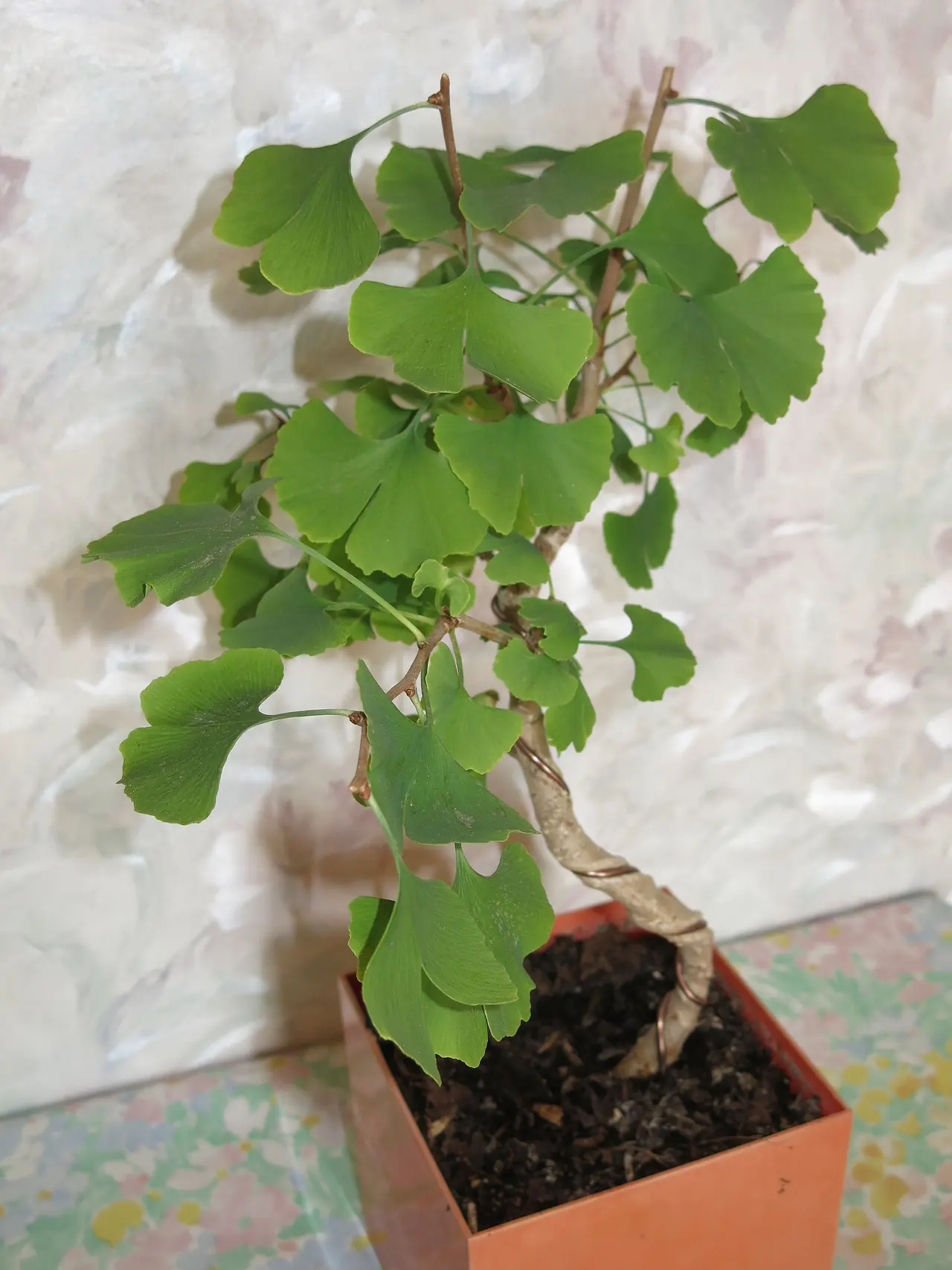
Wire bends a branch into a new line; once enough new wood has grown, the branch holds it and the wire comes off. Use wire about a third as thick as the branch, as most guides do (growers differ for aluminium), coil it evenly (most guides coil at about 45 degrees; we recommend a more open coil), anchor every piece, and take it off by cutting before it scars the bark. We recommend letting a pine take a slight bite before the wire comes off and never marking a maple, though growers differ.
Copper or aluminium
Copper holds better, so a thinner wire does the job; aluminium is easier to apply and can be reused (Harry Harrington). Copper stiffens once wound on and cannot be reused without re-annealing (Adam Lavigne). The usual pairing is copper for pines and aluminium for deciduous trees; Bjorn Bjorholm uses aluminium on maples because it is gentler on the bark.
How thick
Bonsai Empire, Harrington and the Buffalo Bonsai Society all give about a third of the branch's thickness, and Harrington cuts each piece about a third longer than the branch. Soft aluminium needs a thicker gauge than copper, and for aluminium on maples growers differ (below).
Angle and spacing
The same three sources wind the wire at about 45 degrees to the branch, from base to tip, so the turns sit evenly spaced; Harrington makes the last turn square to the branch.
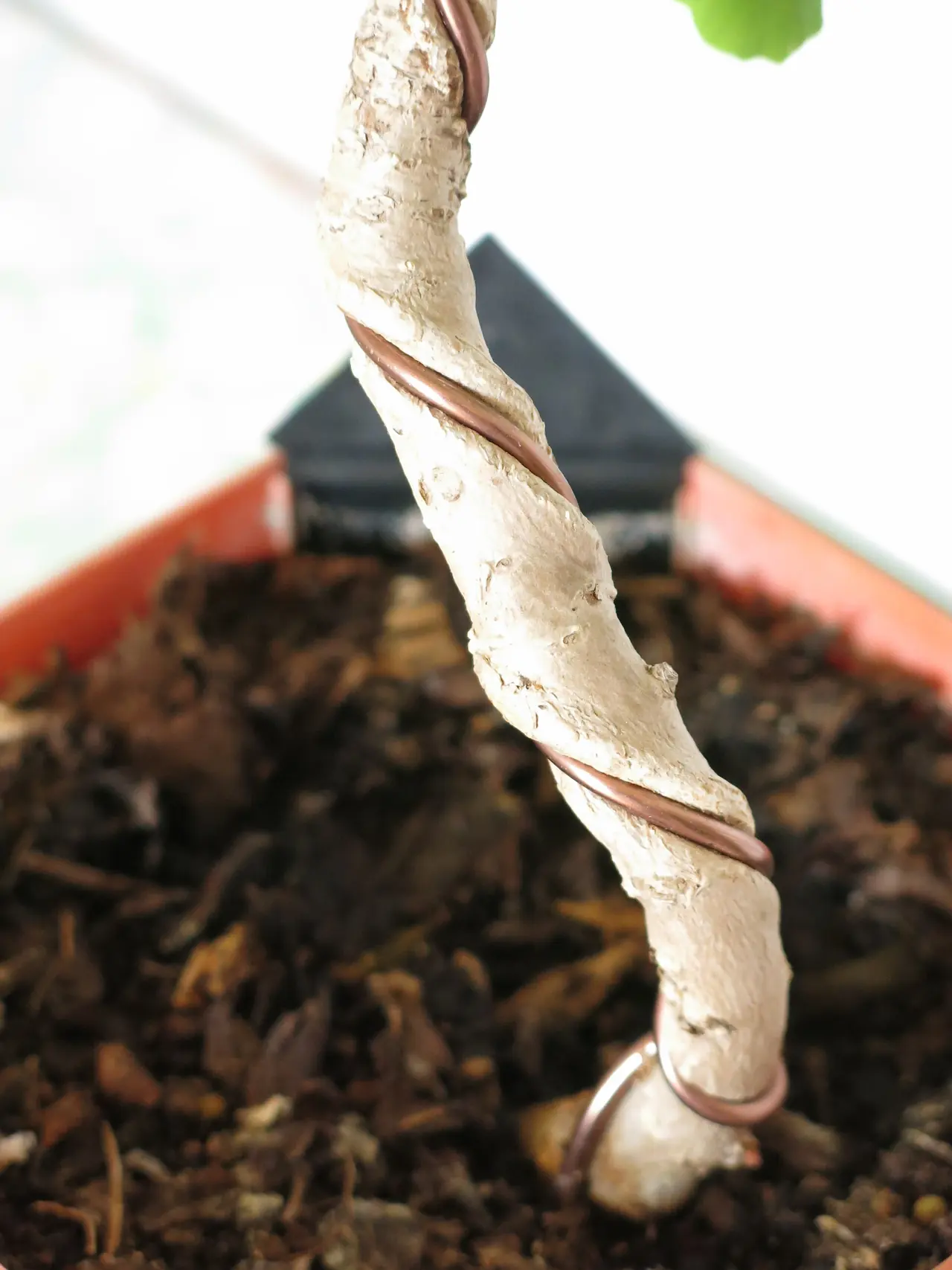
Anchoring
- Wire the trunk first, then the main branches, then the smaller ones (Harrington).
- Wire two branches of similar thickness with one piece; Jonas Dupuich takes at least one and a half turns round the trunk between branches on opposite sides, two on the same side.
- At a fork, set the lowest turn under the branch's base, never below the split (Dupuich).
- Test it: bend one wired branch, and if another on the same wire moves, the wire is not anchored (Dupuich).
Bending
Wire everything you plan to bend first, then bend each branch once, with the wire on the outside of the curve. Bonsai Empire wraps thick branches in wet raffia and guy-wires those too thick to coil. Avoid heavy bends on a maple in winter, when Bjorholm sees die-back the next spring.
When to wire, by species and stage
Black pine. Dupuich, in the mild San Francisco Bay Area, wires from when summer growth hardens in autumn until the buds grow in spring, protecting wired pines from frost, and also straight after candle cutting, before summer shoots appear and become easy to break. Growers differ on the season (below).
Japanese maple. Wire young, flexible branches just after leaf fall, on bare branches before the buds extend, once the spring leaves have hardened, or after midsummer leaf cutting. These are tree stages, so they carry between climates; Australian growers follow the same stages in their own seasons.
How long it stays on, and bite
Leave wire on until the branch holds, or the bend springs back. On young pines Dupuich leaves the first wire 3 to 12 months and the Buffalo society 6 to 7; Bonsai Empire says branches grow round wire in 1 to 4 months. We recommend letting a pine take a slight bite before removal, and never letting wire mark a maple. On a maple we recommend a few months, checking for bite; Bjorholm expects to remove it within 1 to 2 months. Light marks grow out in a year or two; deep ones can be permanent.
Taking it off
The common advice, from Bonsai Empire and Harrington, is to cut the wire at every turn, because unwinding can knock off buds or break branches. Growers differ (below).
Where growers differ
Wire bite. Our recommendation, where growers differ: a slight bite on a pine, never a mark on a maple. Dupuich waits until pine wire has "begun to cut in"; Bonsai Empire removes it before any bite.
How long on a maple. Our recommendation, where growers differ: a few months, checking for bite. Harrington says deciduous branches can set in "as little as two or three weeks", Bonsai Empire 6 to 12 months.
Aluminium on maples. Growers differ, with no recommended way: a third of the branch (Bonsai Empire; Harrington, thicker for aluminium) against about the same thickness as the branch (Peter Tea).
The coil angle. We recommend a more open coil than the usual 45 degrees, using less wire, as Mirai does; it writes that 45 "overly hardens" the wire. Growers differ: Harrington, Bonsai Empire and the Buffalo society coil at about 45 degrees.
Pine season. Our recommendation, where growers differ, follows Bjorholm: wire pines from late summer through autumn, once summer growth has hardened, not in spring or summer; he writes from hot-summer Tennessee, so the hardened growth is the marker to follow elsewhere. Dupuich wires from autumn into spring and straight after candle cutting; the Buffalo society, in cold-winter New York, says "Wiring should initially be done in March".
Cut or unwind. Growers differ, with no recommended way: Harrington reuses heavier aluminium, Lavigne unwinds aluminium, and Michael Hagedorn cuts large wire but unwinds small wire, which nicks the branch when cut.
Common mistakes
- Two branches leaving one spot on one wire ("teeter-totter wiring", Dupuich): pair branches that leave at different heights.
- Maple wire forgotten through a growing season: check it often and remove it before it bites.
Related
- Japanese black pine care, season by season
- How to care for a Japanese maple bonsai
- Decandling black pine
Sources
- Bonsai Empire: Wiring, Tools
- Harry Harrington, bonsai4me: Wiring, Tools, Japanese maple guide
- Jonas Dupuich, Bonsai Tonight: Anchoring wire, Preventing splits at a Y junction, Setting the first curves, Wire scars mid-way along the trunk, Balancing vigor with sacrifice branches, Wiring at decandling time, Basic tools
- Buffalo Bonsai Society: Bonsai wiring (Arthur Skolnik's notes), Black pine pruning
- Bjorn Bjorholm, Eisei-en: Japanese maple care, Japanese pine care
- Bonsai Mirai: Bonsai wiring technique
- Michael Hagedorn, Crataegus Bonsai: Should wire be unwound or cut off?
- Adam Lavigne: Bonsai wire
- Peter Tea: The Trident Maple Project and Summer Maple Work
- Australian growers on southern-hemisphere seasons: AusBonsai forum thread